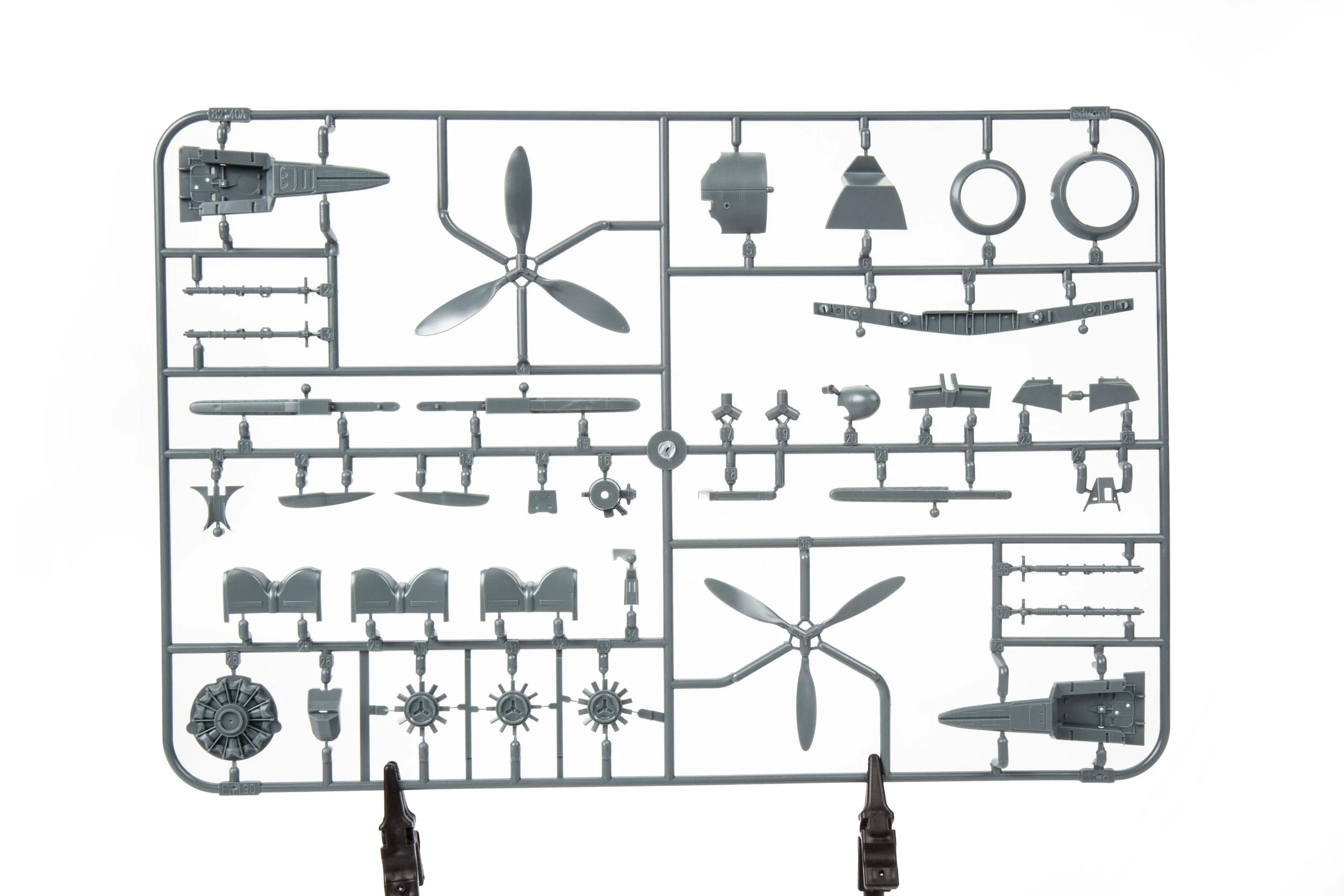
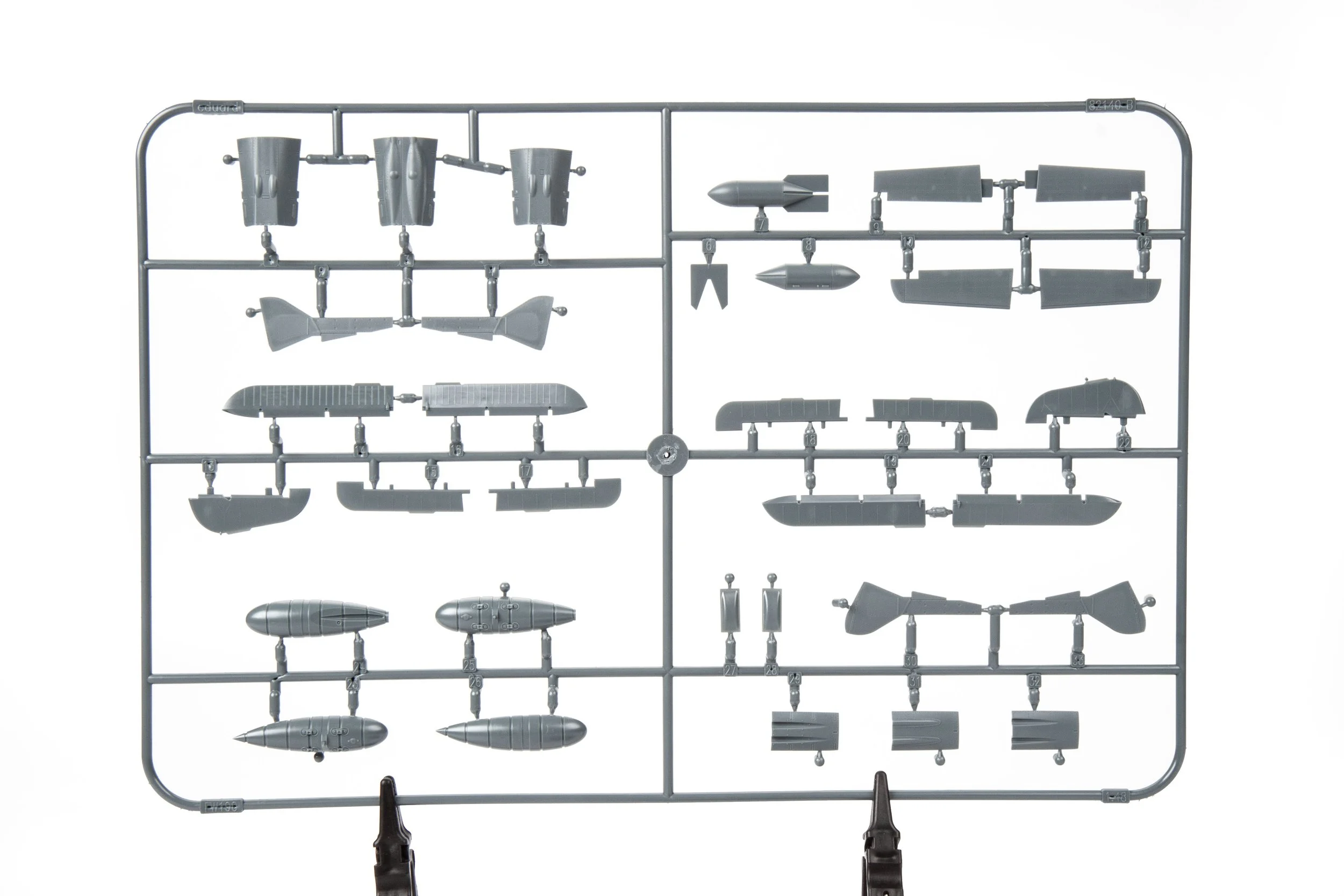
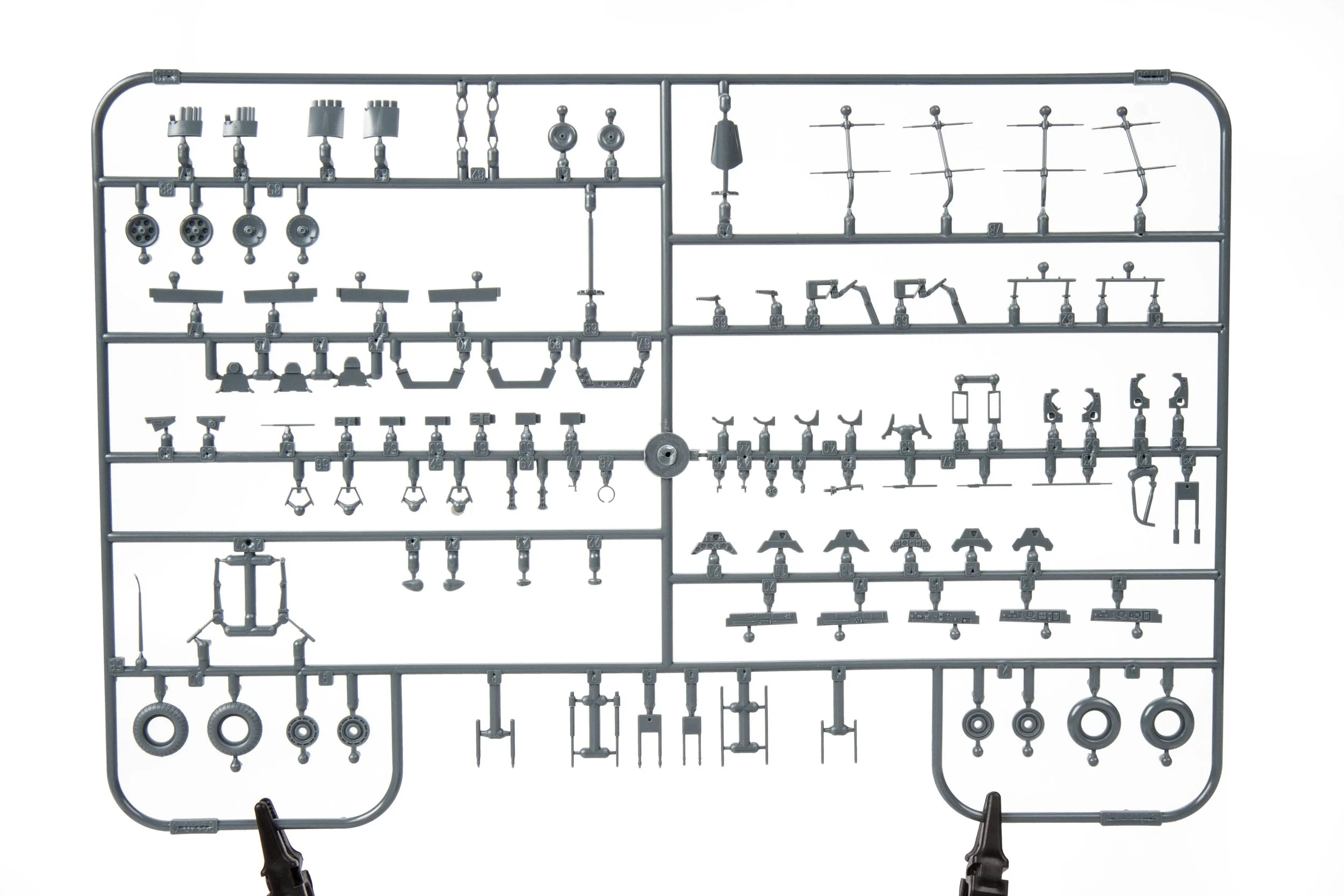
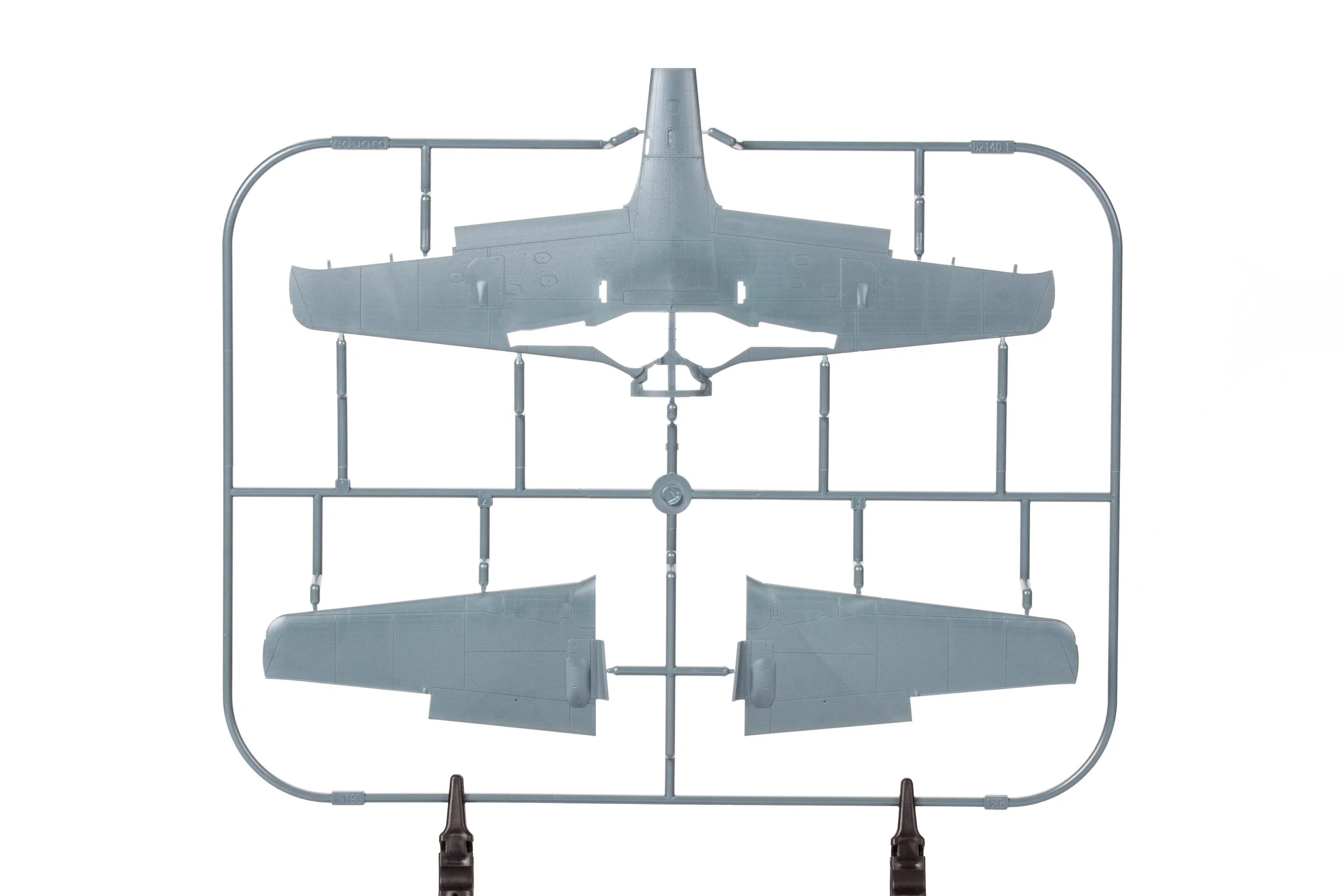
Hawker Typhoon Mk.IB “Car Door”, 1943
The 1943 Hawker Typhoon Mk.IB “Car Door” marks a pivotal moment in the development of one of the RAF’s most formidable wartime aircraft. Originally conceived as a high‑altitude interceptor, the Typhoon had, by this stage, fully embraced its emerging role as a low‑level strike and ground‑attack platform—where its true capabilities became unmistakably clear.
Still equipped with its characteristic side‑opening cockpit doors and heavily framed canopy, the “Car Door” variant remained in frontline service throughout 1943, even as the later bubble‑canopy models began to appear. Incremental improvements, particularly to the powerful but temperamental Napier Sabre engine, steadily increased reliability and allowed pilots to operate the aircraft with growing confidence.
Armed with four 20 mm Hispano cannons, the Typhoon delivered devastating firepower, making it highly effective against a wide range of ground targets. As 1943 progressed, it increasingly took on the role of a fighter‑bomber, carrying bombs for precision attacks on transport networks, infrastructure, and fortified positions. Its exceptional low‑altitude speed, combined with a rugged airframe, made it ideally suited to these demanding and often hazardous missions.
By this point in the war, the Typhoon had begun to earn a strong reputation among its crews—and a healthy respect from the enemy. Though still recognisable by its early “Car Door” configuration, the 1943 variant represents a maturing aircraft: one that had overcome its troubled beginnings to become a vital component of the RAF’s tactical air power, setting the stage for its decisive impact in the campaigns that followed.
Hawker Typhoon Mk.IB “Car Door”, 1943
The 1943 Hawker Typhoon Mk.IB “Car Door” marks a pivotal moment in the development of one of the RAF’s most formidable wartime aircraft. Originally conceived as a high‑altitude interceptor, the Typhoon had, by this stage, fully embraced its emerging role as a low‑level strike and ground‑attack platform—where its true capabilities became unmistakably clear.
Still equipped with its characteristic side‑opening cockpit doors and heavily framed canopy, the “Car Door” variant remained in frontline service throughout 1943, even as the later bubble‑canopy models began to appear. Incremental improvements, particularly to the powerful but temperamental Napier Sabre engine, steadily increased reliability and allowed pilots to operate the aircraft with growing confidence.
Armed with four 20 mm Hispano cannons, the Typhoon delivered devastating firepower, making it highly effective against a wide range of ground targets. As 1943 progressed, it increasingly took on the role of a fighter‑bomber, carrying bombs for precision attacks on transport networks, infrastructure, and fortified positions. Its exceptional low‑altitude speed, combined with a rugged airframe, made it ideally suited to these demanding and often hazardous missions.
By this point in the war, the Typhoon had begun to earn a strong reputation among its crews—and a healthy respect from the enemy. Though still recognisable by its early “Car Door” configuration, the 1943 variant represents a maturing aircraft: one that had overcome its troubled beginnings to become a vital component of the RAF’s tactical air power, setting the stage for its decisive impact in the campaigns that followed.
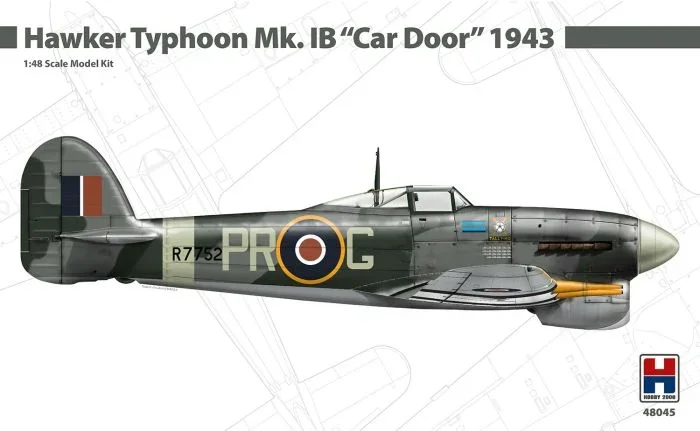 Image 1 of 2
 Image 2 of 2